Cooling Systems Designed for Southern Summer Conditions
Air Conditioning Services in Hot Springs for AC installation, refrigerant leak repair, and energy-efficient cooling solutions
Extended cooling seasons and consistent humidity create operating conditions where air conditioning systems run nearly continuously from May through September, making equipment reliability and efficiency critical for comfort and cost control. AC installation and replacement by Enterprise Heating and Air addresses undersized systems that never reach target temperatures, aging equipment with declining efficiency, and units experiencing repeated compressor or condenser failures. Refrigerant leak detection and repair prevents gradual performance loss as refrigerant charge drops below the level needed for proper heat transfer and compressor lubrication.
Installation work includes removing old equipment, positioning new condenser units on level pads with proper clearance for airflow and service access, connecting refrigerant lines that are properly sized for the distance between indoor and outdoor components, and evacuating air from the system before charging with the manufacturer-specified refrigerant type and amount. AC repair addresses compressor failures that prevent cooling completely, condenser and evaporator coil leaks that allow refrigerant to escape, and fan motor problems that reduce airflow across heat exchange surfaces. Energy-efficient cooling solutions include variable-speed compressors that adjust capacity based on actual cooling demand rather than cycling on and off at full capacity.
Request a cooling system evaluation to determine whether repair, efficiency upgrades, or replacement makes sense for your current equipment condition.
What You Notice Once Cooling Performance Is Restored
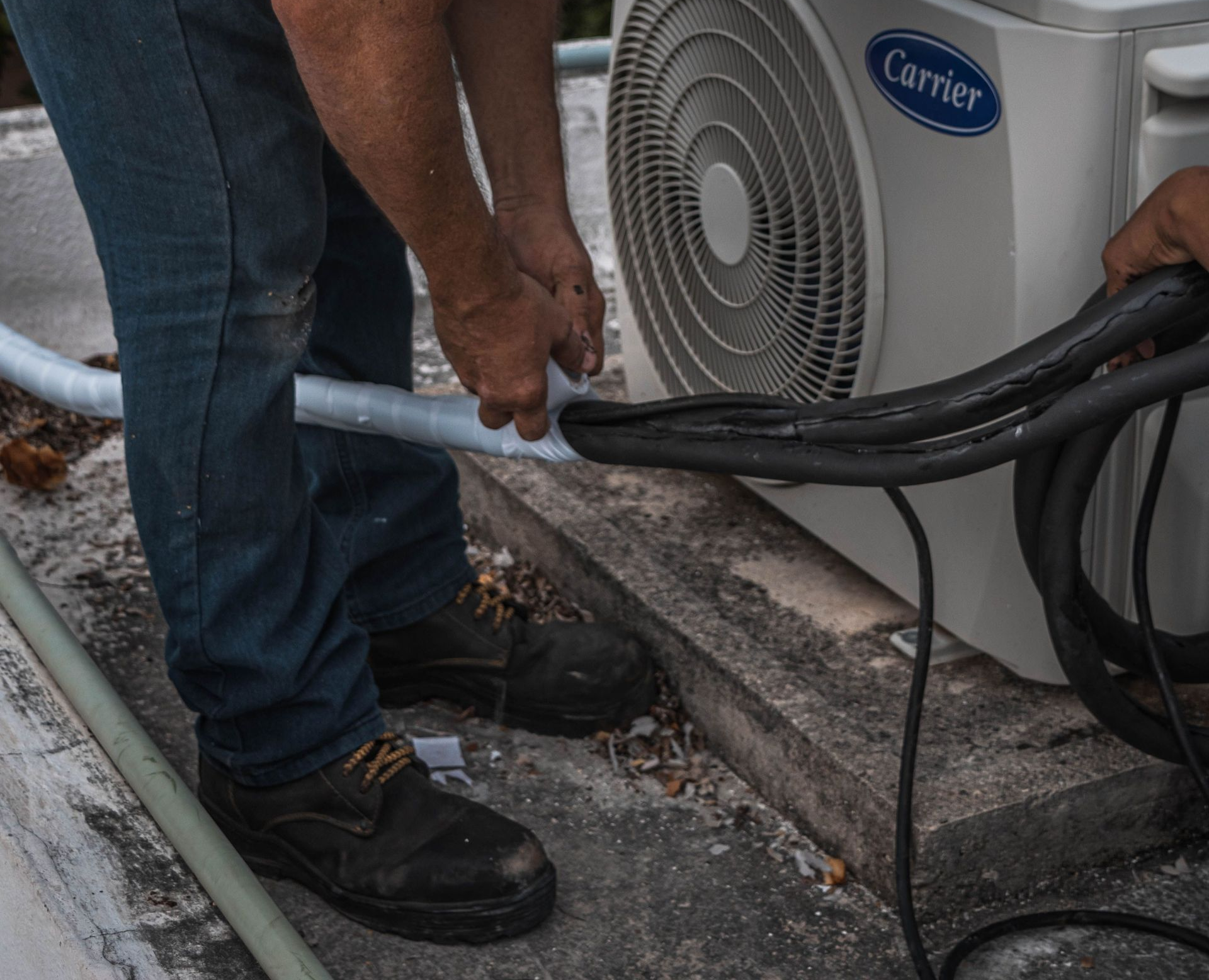
Your air conditioning work begins with refrigerant pressure testing that reveals whether the system is properly charged, overcharged, or experiencing leaks that require repair before refrigerant is added. Leak detection uses electronic sensors or nitrogen pressure testing to locate pinhole leaks in coil tubing or loose connections at line set fittings, followed by brazing or connection tightening before the system is evacuated and recharged. Condenser repairs address outdoor unit components including the compressor, fan motor, contactor, and capacitor, while evaporator repairs focus on indoor coil leaks, drain line clogs, and blower assembly problems.
After service completes, indoor temperatures drop to thermostat settings within reasonable timeframes, humidity levels decrease as the system runs long enough to remove moisture from air passing over the evaporator coil, and you notice consistent cooling in all rooms rather than warm spots in areas farthest from the air handler. Energy-efficient equipment produces the same cooling output while drawing less electricity, resulting in lower monthly utility costs that become particularly noticeable during peak summer months when systems operate most heavily. Outdoor units run more quietly and cycle less frequently when properly sized and operating at correct refrigerant pressures.
AC replacement becomes necessary when compressor failure costs approach half the price of new equipment, when refrigerant type is being phased out and requires expensive conversions, or when efficiency has declined to the point where new equipment pays for itself through energy savings within a reasonable timeframe. Refrigerant leaks must be repaired rather than simply adding charge, as environmental regulations prohibit knowingly adding refrigerant to leaking systems. Energy-efficient solutions include two-stage cooling that operates at lower capacity during mild weather and programmable thermostats that reduce runtime when spaces are unoccupied.
What Property Owners Usually Ask
Cooling system decisions often involve questions about repair versus replacement, efficiency improvements, and refrigerant requirements.
How do I know if my AC needs replacement or just repair?
Compressor failure in systems over 12 years old typically warrants replacement since the compressor represents a major portion of total system cost, while repairable issues like fan motors, capacitors, or minor refrigerant leaks make economic sense to fix on newer equipment with years of expected life remaining.
What causes refrigerant leaks?
Vibration from normal operation creates stress points at brazed joints and line set connections, corrosion from moisture exposure affects coil tubing particularly in coastal or high-humidity areas, and factory defects occasionally cause premature coil failure in otherwise new equipment.
Why does my AC run constantly but never cool properly?
Refrigerant charge below the correct level from leaks or improper initial charging, dirty coils that prevent heat transfer, failed compressors that run without pumping refrigerant effectively, and undersized equipment for the space being cooled all cause continuous operation without reaching target temperatures.
What SEER rating makes sense for Hot Springs climate?
Extended cooling seasons justify higher-efficiency equipment with SEER ratings of 16 or above, as the additional upfront cost recovers through energy savings more quickly than in regions with shorter cooling periods and less continuous operation.
How long does AC installation typically require?
Most residential AC replacements finish within one day once the equipment arrives, including removal of old equipment, installation of the new system, evacuation and charging of refrigerant lines, and verification testing, though complex installations with ductwork modifications or electrical upgrades may extend into a second day.
Enterprise Heating and Air handles AC installation, repair diagnostics, refrigerant leak location and repair, and efficiency upgrades throughout Hot Springs. Schedule an inspection to review your cooling system's condition, performance levels, and whether repair or replacement makes better financial sense given your equipment's age and current operating costs.