Cold Storage That Holds Temperature Consistently
Commercial Refrigeration in Hot Springs for walk-in units that struggle during peak hours, compressors that short-cycle, and product loss from temperature swings
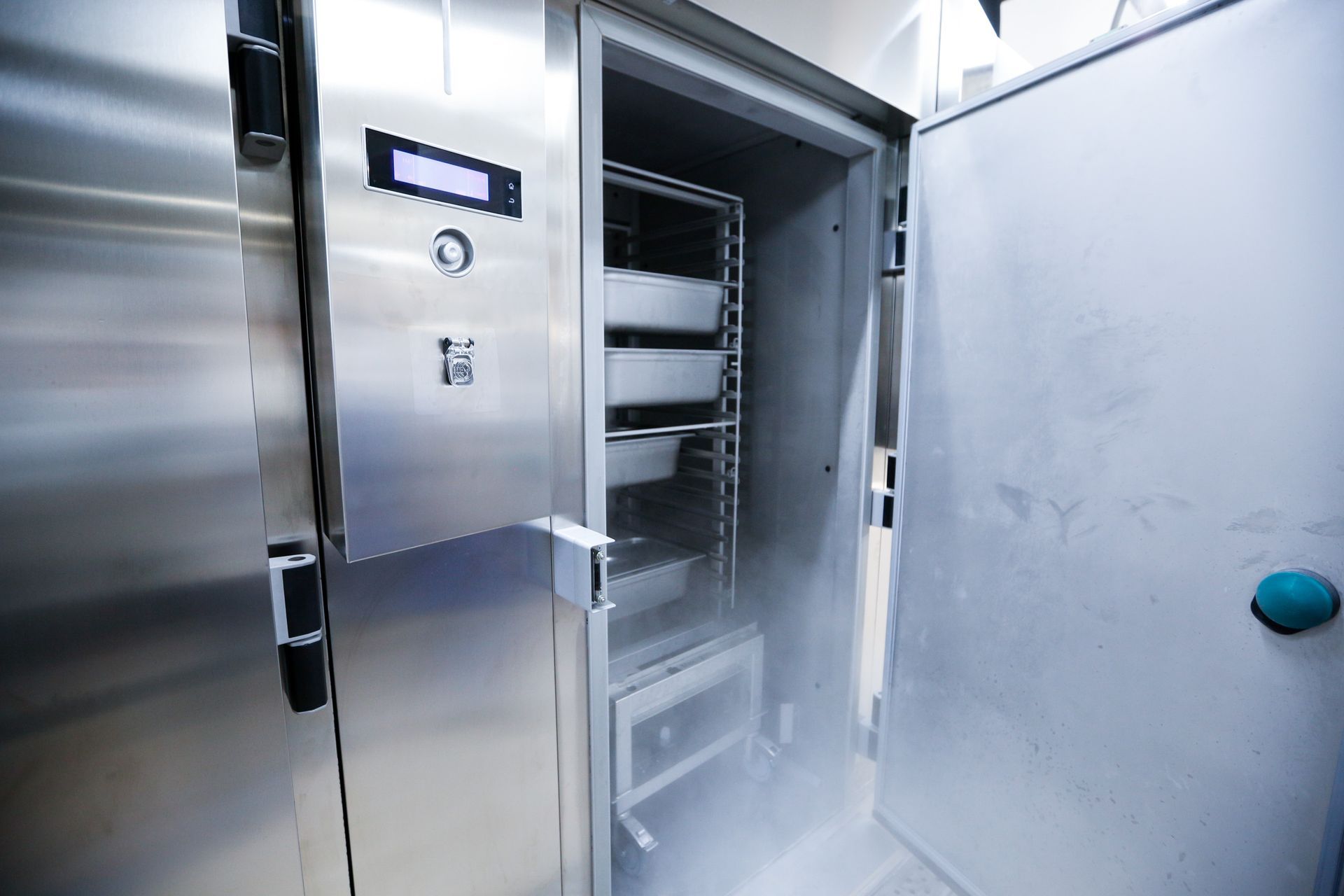
Walk-in coolers that can't maintain setpoint during busy service hours usually fail because of refrigerant leaks, door seal deterioration, or evaporator coils clogged with dust and grease buildup. Enterprise Heating and Air handles commercial refrigeration service in Hot Springs for restaurants, convenience stores, and warehouses where even minor temperature drift spoils inventory. The work involves diagnostics to isolate whether the problem originates in the refrigeration circuit, insulation envelope, or control system.
Commercial refrigeration maintenance includes cleaning condenser coils, checking refrigerant charge, testing door gaskets for air leaks, and calibrating thermostats so compressors cycle properly. Reach-in cooler service often focuses on fan motors and defrost timers, which fail more frequently in high-humidity climates where frost accumulates faster on evaporator coils.
Arrange an on-site inspection to evaluate current system performance and identify components nearing end of service life.
Why Walk-In Units Require Preventative Service
Preventative maintenance catches refrigerant leaks before they enlarge, replaces worn door hinges before seals separate from the frame, and cleans coils before airflow restriction forces compressors to run continuously. Technicians measure superheat and subcooling to verify refrigerant charge matches manufacturer specifications, since undercharged systems freeze evaporator coils while overcharged systems cause high head pressure that damages compressors.
After service, your walk-in freezer recovers to setpoint faster after door openings, compressors cycle off instead of running nonstop, and interior temperatures stay within the two-degree range required for food safety compliance. You'll also notice quieter operation when worn fan bearings get replaced and reduced frost buildup after defrost cycles are recalibrated.
Installation of new walk-in units includes selecting condensing units sized for actual load requirements and local ambient conditions, not just cubic footage calculations. Undersized equipment runs constantly during summer heat, while oversized compressors short-cycle and fail to dehumidify properly, both of which shorten component lifespan.
What Property Owners Usually Ask
Commercial refrigeration questions typically focus on preventing downtime and extending equipment life between major replacements.
What causes walk-in coolers to lose temperature overnight?
Door gaskets that have hardened or torn allow warm, humid air infiltration that overworks the refrigeration system. Even small gaps around doors force compressors to run continuously trying to offset heat gain.
How often should condenser coils be cleaned?
In Hot Springs, where pollen and cottonwood seeds clog coils during spring, quarterly cleaning prevents airflow restriction that causes high head pressure and compressor overheating. Neglected coils reduce efficiency by 20 percent or more.
When does a refrigeration system need refrigerant added?
Only when there's a leak, since these are closed systems that don't consume refrigerant through normal operation. Adding refrigerant without finding and repairing the leak just delays equipment failure.
What's involved in walk-in freezer diagnostics?
Technicians test compressor amperage draw, measure suction and discharge pressures, verify defrost timer operation, and inspect evaporator fans for proper airflow. Diagnosing intermittent failures often requires monitoring system performance over a full 24-hour cycle.
How does preventative maintenance reduce emergency repairs?
Scheduled service identifies worn contactors, failing start capacitors, and deteriorating wiring before they cause complete system shutdowns. Replacing a $30 contactor during maintenance prevents a $1,500 compressor failure three months later.
Enterprise Heating and Air designs preventative maintenance schedules based on equipment age, usage intensity, and operating environment. Contact the office to establish a service interval that prevents downtime during your peak business periods.